


 English
 Spanish
 French
 German
 Italian
 Chinese (Simplified)
 Japanese
 Korean
 Arabic
 Portuguese

 Send Inquiry
Industrial Rectifier Transformers
MOQ : 1 Unit
Industrial Rectifier Transformers Specification
- Coil Material
- Electrolytic Copper
- Capacity
- Up to 5000 kVA
- Rated Voltage
- Up to 33 kV
- Voltage Booster Type
- Tap changing under load (OLTC/Off-circuit)
- Operating Temperature
- -25C to +45C
- Dimension (L*W*H)
- 3200mm x 1600mm x 2300mm
- Standard
- IS 2026 / IEC 60076
- Low Voltage
- 380 V to 690 V
- Cooling Type
- ONAN/ONAF (Oil Natural Air Natural/Oil Natural Air Forced)
- High Voltage
- 11 kV to 33 kV
- Load Loss
- As per IEC/IS standards
- Product Type
- Industrial Rectifier Transformer
- Material
- Copper
- Output
- Product wise
- Frequency (MHz)
- 50 Hertz (HZ)
- Efficiency
- 99.9%
- Phase
- Three Phase
- Usage
- Industrial rectification and DC applications
- Coil Structure
- Layer wound
- Coil Number
- Double
- Power Scope
- 100 kVA to 5000 kVA
- Weight
- 3200 kg (for standard models)
- Expected Life Span
- 20 years
- Cooling Medium
- Mineral Transformer Oil (IS 335/IEC 60296)
- Ambient Humidity
- 95% RH
- Winding Technique
- Multilayer with Interleaved Structure
- Impedance
- 6% 7%
- Tap Range
- 5% in 2.5% steps
- Short Circuit Withstand
- As per IS/IEC standards
- Service Condition
- Indoor / Outdoor
- Paint Type
- Epoxy Powder Coated
- Overload Capacity
- Up to 120% for short duration
- Terminal Arrangement
- Copper bus bar
- Insulation Class
- Class F / Class H
- Noise Level
- 60 dB at 1 meter
- Mounting Type
- Floor mounting
Industrial Rectifier Transformers Trade Information
- Minimum Order Quantity
- 1 Unit
- Supply Ability
- 100 Units Per Month
- Delivery Time
- 2-3 Months
About Industrial Rectifier Transformers
Constructed a modern infrastructure base and manufacturing unit, we are engaged in manufacturing and exporting Industrial Rectifier Transformers. Suitable for converting direct current to alternating current, these rectifier transformers are immensely used for different electrical applications. These rectifier transformers are engineered at our well-equipped manufacturing unit using tested quality components & materials. In addition to this, these Industrial Rectifier Transformers are stringently tested in order to deliver flawless range at client's end.
Industrial Rectifier Transformers Features:
- Available in different models.
- There are more options for free, forced or fan cooling.
- Regulated configurations with tight voltage control,
- Unregulated configurations for ingenuity and Credibility.
- The main features clean input of power with low harmonic distortion.
- They have minimum output current ranging up to 10 KA DC with primary voltage up to 33 KV.
- Transformer rectifiers are highly efficient and requires minimum maintenance.
- Resistant to adverse conditions
- Easy installation
- Impeccable efficiency
Technical details
|
Phase |
Three Phase |
|
Application of Transformer |
Power / Distribution / Furnace etc. |
|
transformers ranges |
up to 10 KA DC |
|
voltage |
up to 33 KV. |
|
Capacity Of Transformer |
kV |
|
Primary Voltage Ratio |
kV |
|
Secondary Voltage Ratio |
Fremycetin Sulphate B.P. 1% w/w |
|
Type of Transformer |
Oil Cooled / Air Cooled VPI or CRT |
Precision and Performance for Industrial Applications
These transformers are engineered for environments demanding superior rectification and DC output. With advanced winding techniques, thermal stability, and copper bus bar terminals, users gain unmatched operational reliability. Floor mounting and epoxy-coated bodies guarantee endurance against industrial stresses and harsh outdoor climates.
Adaptable and Customizable Power
With capacities up to 5000 kVA and flexible tap ranges (5% in 2.5% steps), these units match diverse industrial requirements. Options for ONAN/ONAF cooling and OLTC/off-circuit tap changing further elevate their adaptability across various DC-driven operations, ensuring steady power flow and minimized losses.
FAQ's of Industrial Rectifier Transformers:
Q: How does the OLTC (On Load Tap Changer) work in the transformer?
A: The OLTC (On Load Tap Changer) allows adjustment of transformer output voltage without interrupting the supply. This is beneficial in industrial processes requiring continuous voltage regulation, especially under variable load conditions.Q: What industries benefit most from these rectifier transformers?
A: Industries involved in electrolysis, DC traction, smelting, rolling mills, and chemical manufacturing primarily benefit due to their need for consistent DC power and high load handling. Applications requiring precise voltage control and minimal downtime find these transformers ideal.Q: When is periodic maintenance needed for optimal transformer performance?
A: Routine maintenance is advised annually or as per the manufacturer's schedule. Key activities include oil quality testing (as per IS 335/IEC 60296), checking terminal integrity, and ensuring insulation and cooling systems operate efficiently.Q: Where can these transformers be installed?
A: These transformers are suitable for both indoor and outdoor sites. Their epoxy powder-coated enclosures and robust construction provide substantial protection against humidity (up to 95% RH), dust, and temperature fluctuations.Q: What process is involved in the installation of a floor-mounted transformer?
A: Installation starts with preparing a solid and level foundation. The transformer is then securely positioned using integrated mounting points, followed by connection of high and low voltage terminals via the copper bus bars. All electrical and grounding arrangements are finalised as per safety regulations.Q: How does the high efficiency of 99.9% benefit industrial users?
A: A 99.9% efficiency translates to minimal energy loss during operation, resulting in substantial savings on electricity, reduced cooling demands, and overall lower lifetime operational costs-critical for large-scale industrial units.Q: What is the expected service life and under what conditions is it validated?
A: These transformers are designed for a service life of 20 years when operated within specified conditions (ambient temperatures -25C to +45C, up to 95% RH). Adherence to IS/IEC standards in manufacturing ensures reliability throughout their expected lifespan.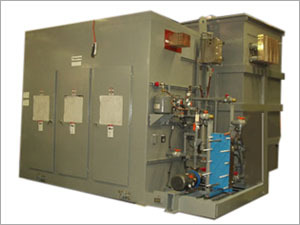
Tell us about your requirement

Price:
Quantity
Select Unit
- 50
- 100
- 200
- 250
- 500
- 1000+
Additional detail
Mobile number
Email

More Products in Rectifier Transformers Category
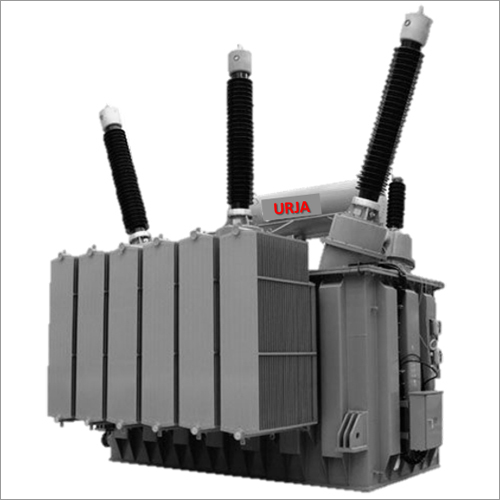
Reactor Transformers
Minimum Order Quantity : 1 Unit
High Voltage : 33000 Volt (V)
Power Scope : Upto 2 MVA
Material : Copper
Coil Material : Silicon steel

Contact Us

- B-17, Sri Ram Industrial Estate, G.d. Ambekar Road, Wadala (West), Mumbai - 400031, Maharashtra, India
- Phone : 08045477245
URJA TECHNIQUES (INDIA) PVT. LTD.
GST : 27AAACU0899A1ZF
GST : 27AAACU0899A1ZF

- Mr. Pratap Varavadekar (Director - Marketing)
- Mobile :08045477245
- Send Inquiry
- Urja Techniques India Pvt Ltd
R - 653, T.T.C. Industrial Area, MIDC Industrial Area, Rabale, Navi Mumbai, Maharashtra 400701
Tel - 022 27691001
 Send Inquiry
|


URJA TECHNIQUES (I) PVT. LTD.
All Rights Reserved.(Terms of Use)
Developed and Managed by Infocom Network Private Limited.
Developed and Managed by Infocom Network Private Limited.

